
2026.07.16
Professor, Akinobu TANI, School of Eduation Gives Presentation on De-Gallicization in legal English: A corpus study of binomial standardization at International Conference on English Historical Linguisitcs (ICEHL) 23
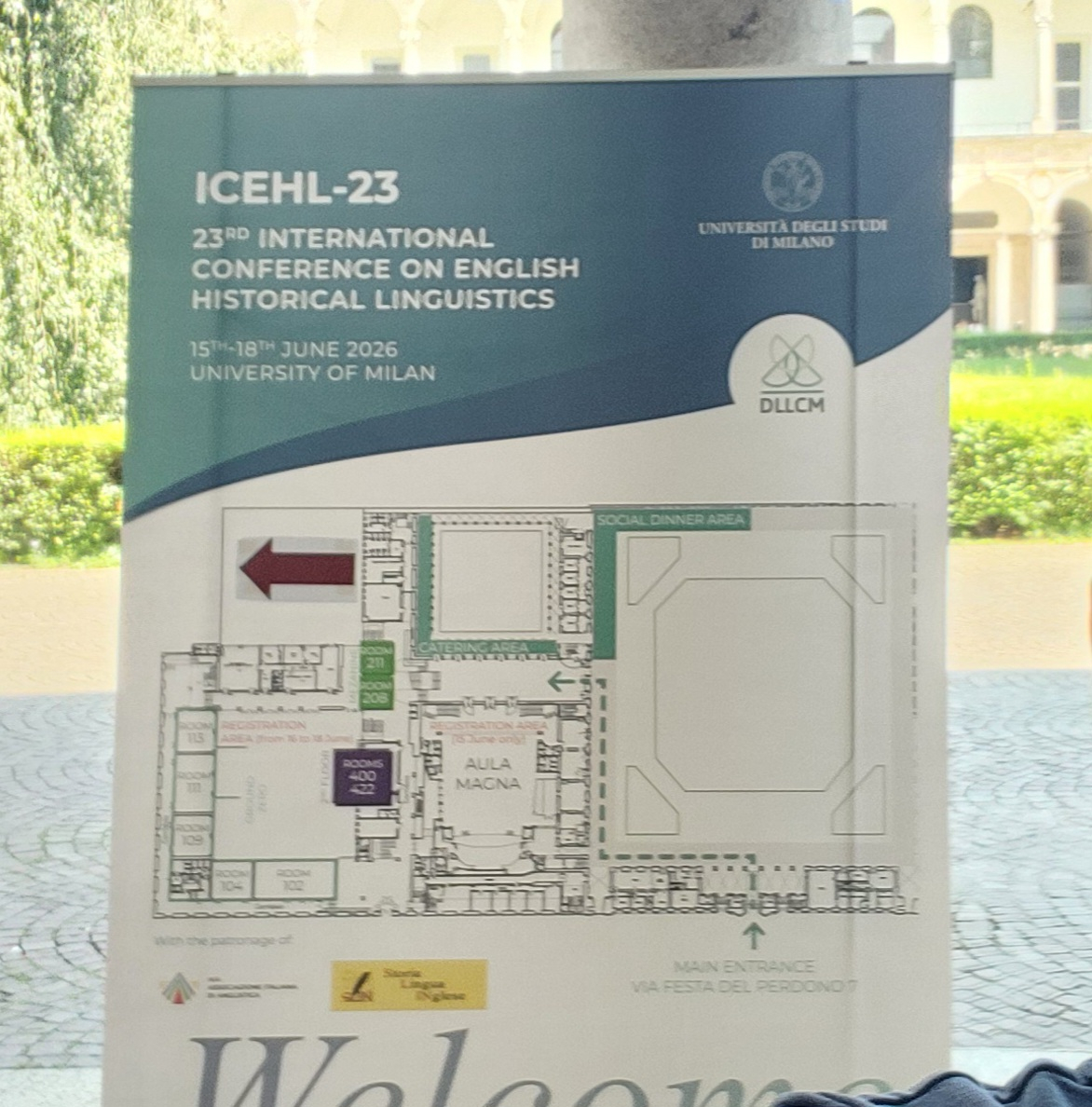
Professor, Akinobu Tani, School of Education gave a presentation on De-Gallicization in Legal English: A Corpus Study of Binomial Standardization at the 23rd International Conference on English Historical Linguistics (ICEHL-23), which was held from June 15, 2026 to June 18, 2026 in Milan, Italy. The International Conference on English Historical Linguistics is an international conference that was first held in Durham, the United Kingdom, in 1979. The 2026 conference was its 23rd meeting and aimed to share the latest research findings on the historical development of the English language and to promote academic exchange and discussion among researchers. 180 researchers from more than 17 countries] gathered to give presentations and hold discussions. Professor Tani’s presentation was part of a panel entitled “Lexical Perspectives on the Rise of Standard English,” which examined the rise of Standard English from lexical perspectives. He engaged in fruitful discussions with European researchers working in closely related fields, thereby broadening his scholarly perspective. He also had the valuable opportunity to meet and establish connections with researchers specializing in historical phraseology.