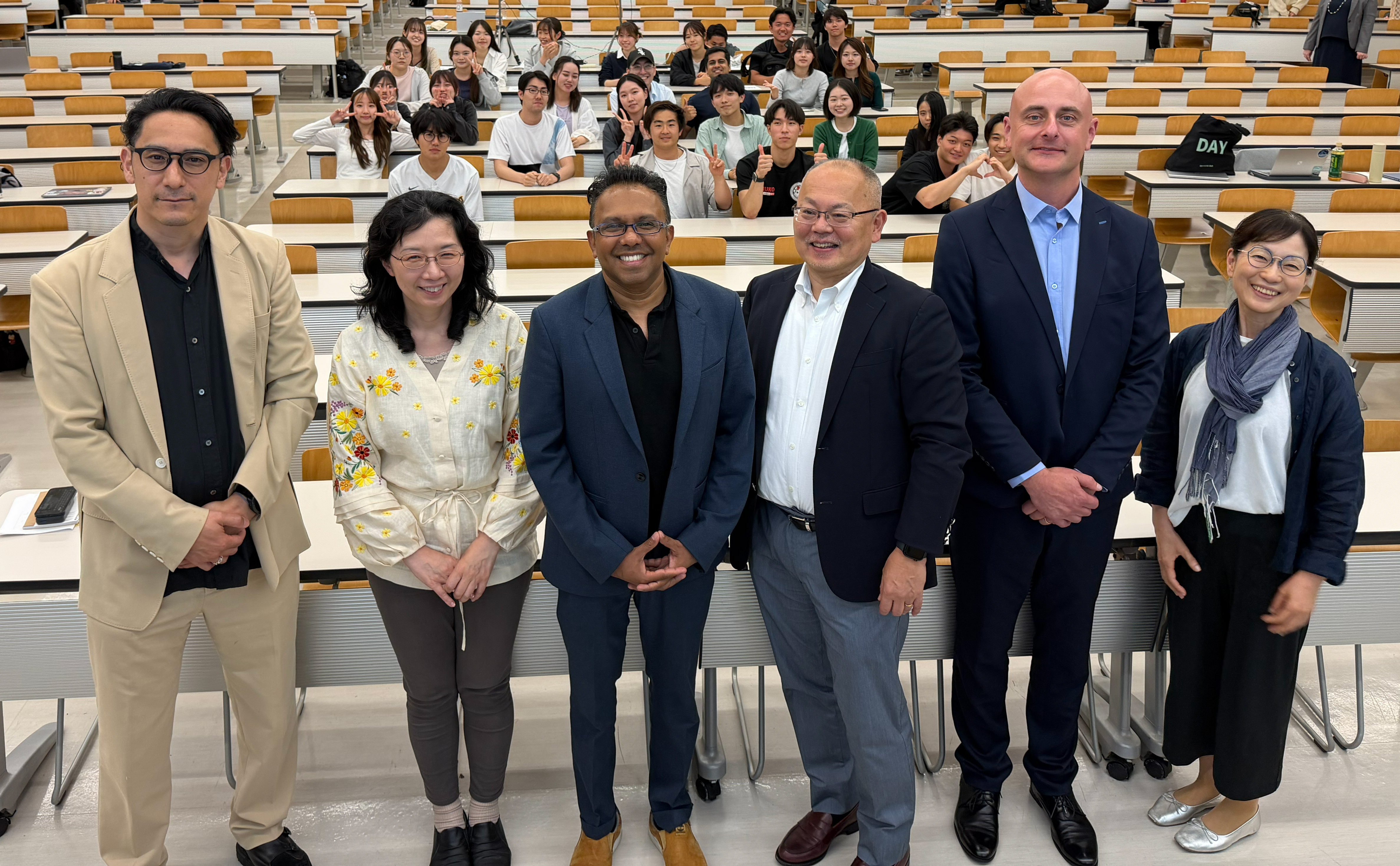

Special Seminar “UNDP on the Frontlines: Advancing the Humanitarian–Development–Peace (HDP) Nexus in Gaza and Ukraine” Held on June 5


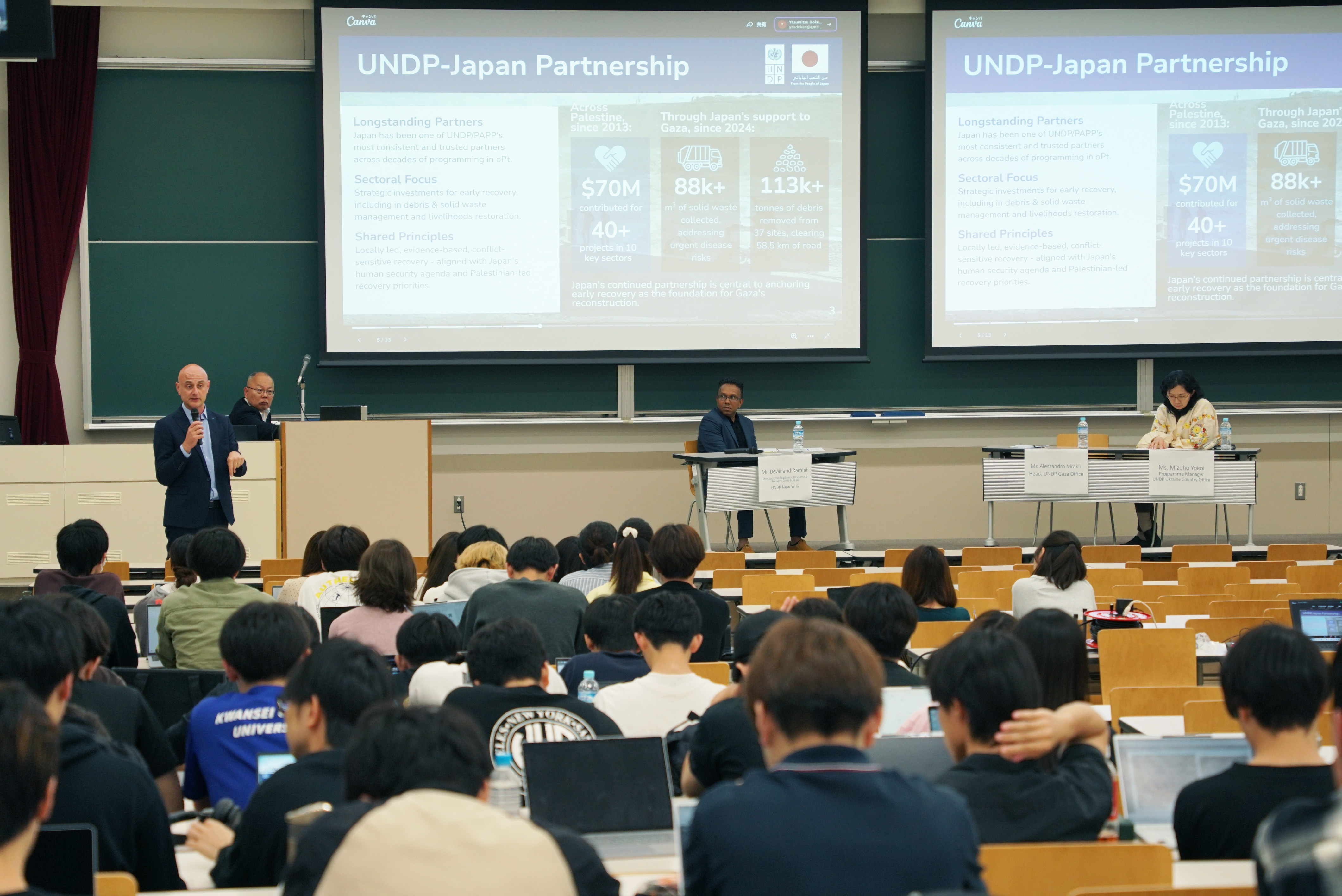
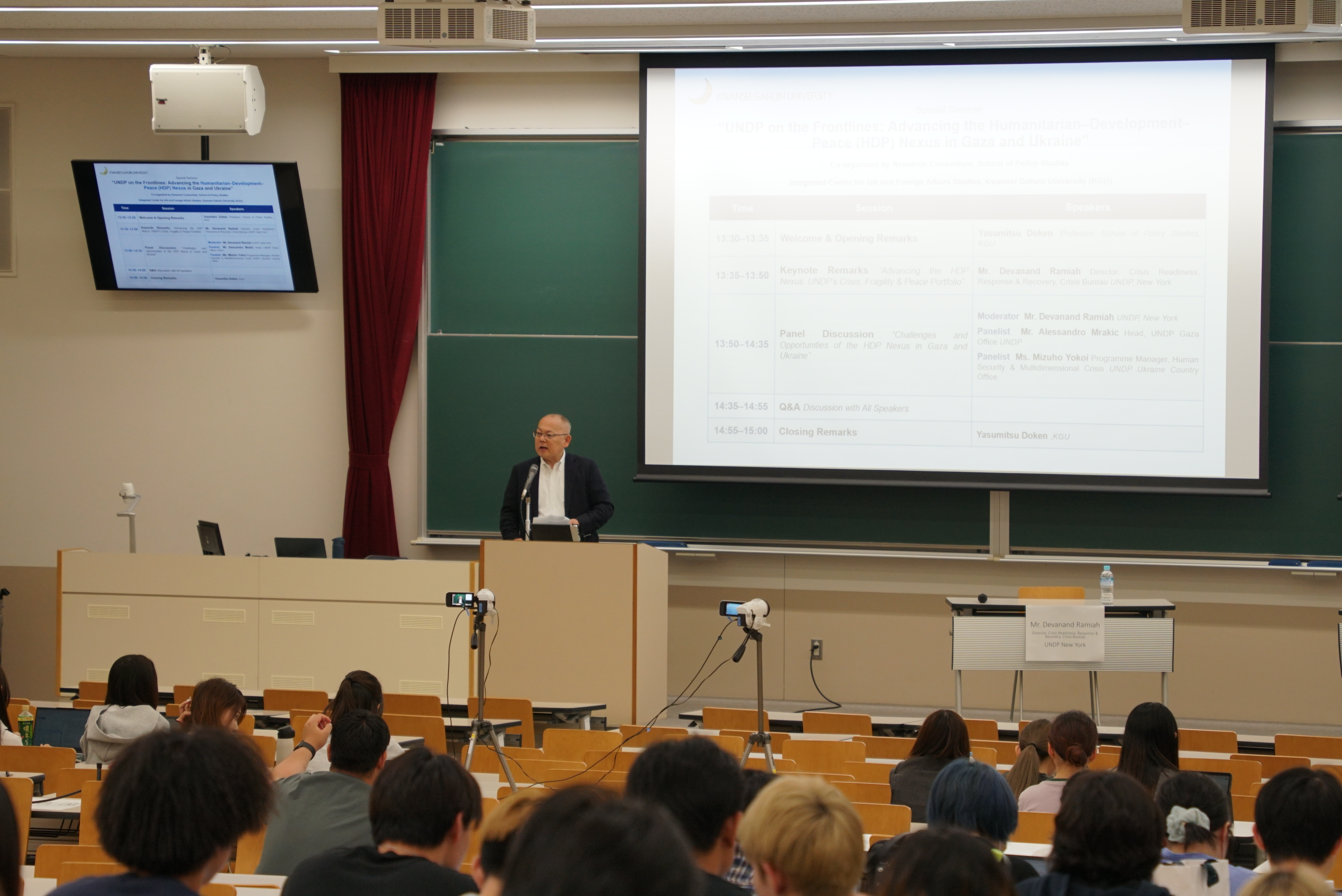
On June 5, 2026, Kwansei Gakuin University hosted the special seminar “UNDP on the Frontlines: Advancing the Humanitarian–Development–Peace (HDP) Nexus in Gaza and Ukraine” at its Kobe Sanda Campus. The event featured Mr. Devanand Ramiah, Director of the Crisis Bureau at the United Nations Development Programme (UNDP); Mr. Alessandro Mrakic, Head of the UNDP Gaza Office; and Ms. Mizuho Yokoi, Programme Manager at the UNDP Ukraine Office. The seminar was moderated by Professor Yasumitsu Doken of the School of Policy Studies. It was organized by the School of Policy Studies and the Graduate School of Policy Studies Research Consortium, and co-organized by the Integrated Center For UN and Foreign Affairs Studies.
Focusing on Gaza and Ukraine—two of the most severe crisis-affected regions in the world today—the seminar explored how humanitarian assistance, development, and peace can be connected and advanced in an integrated manner through the Humanitarian–Development–Peace (HDP) Nexus approach. The event provided students with a valuable opportunity to gain firsthand insights into some of the most pressing global challenges and the international community’s efforts to address them.
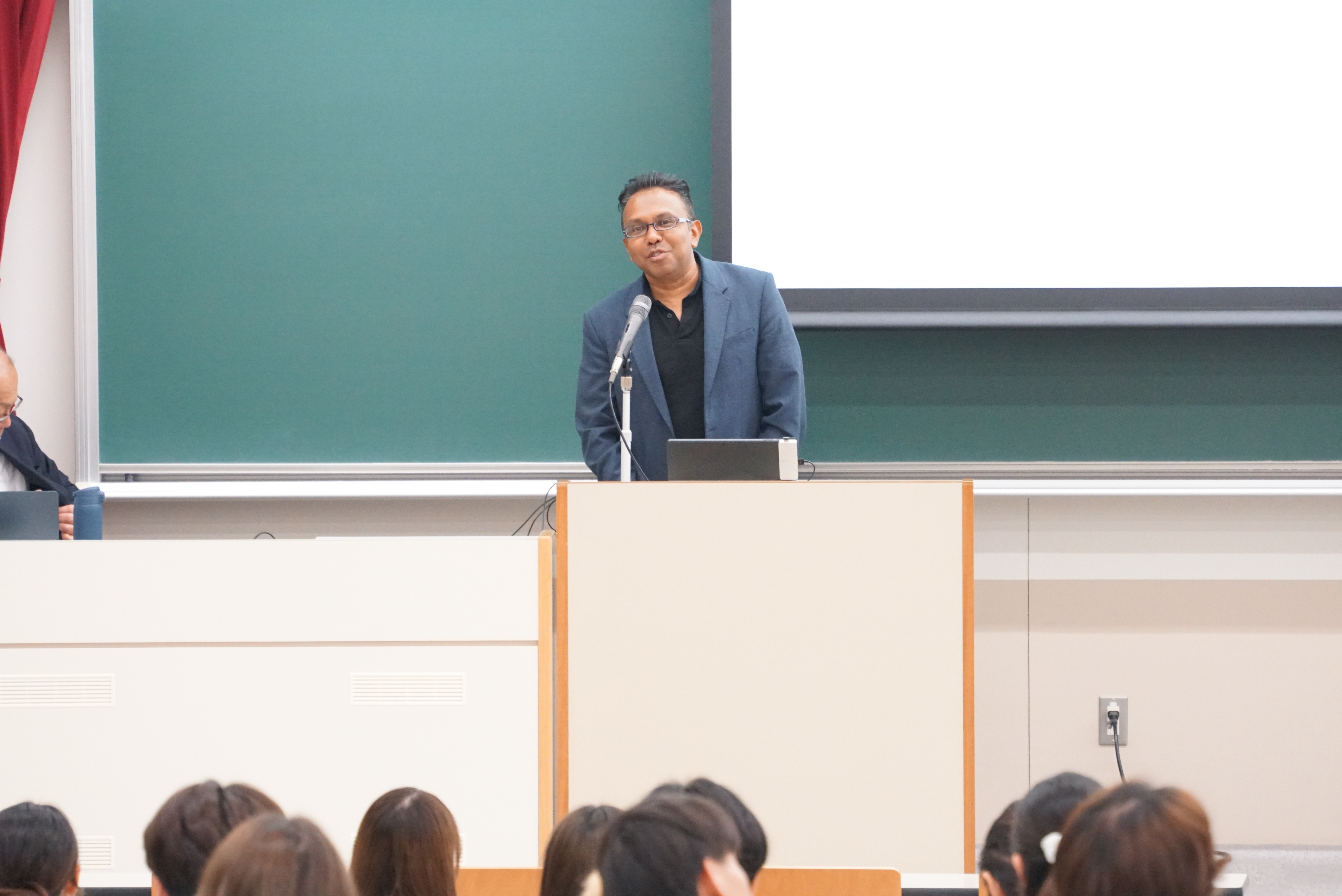
Mr. Ramiah explained that, as conflicts, natural disasters, and forced displacement continue to increase worldwide, emergency humanitarian assistance alone is no longer sufficient to address crises that are increasingly complex and protracted. Guided by the HDP Nexus framework, UNDP promotes an integrated approach that combines crisis preparedness, early recovery, resilience-building, and peacebuilding efforts. He further highlighted the organization's efforts to harness AI and innovation to strengthen the effectiveness and impact of its responses.
Mr. Mrakic and Ms. Yokoi then shared field-based perspectives on recovery efforts in Gaza and Ukraine. In Gaza, where large-scale displacement and widespread destruction of infrastructure have occurred, UNDP is implementing early recovery initiatives such as debris management, livelihood restoration, and job creation. In Ukraine, despite the ongoing conflict, UNDP—with support from the Government of Japan and other partners—is advancing mine action operations, infrastructure rehabilitation, and economic recovery programmes.
The speakers emphasized that these efforts go beyond simply restoring what has been lost. Rather, they aim to “Build Back Better” by enhancing community safety, restoring livelihoods, and strengthening local governance and public services. From the perspective of human security and long-term peacebuilding, they underscored the importance of sustained international engagement and support.
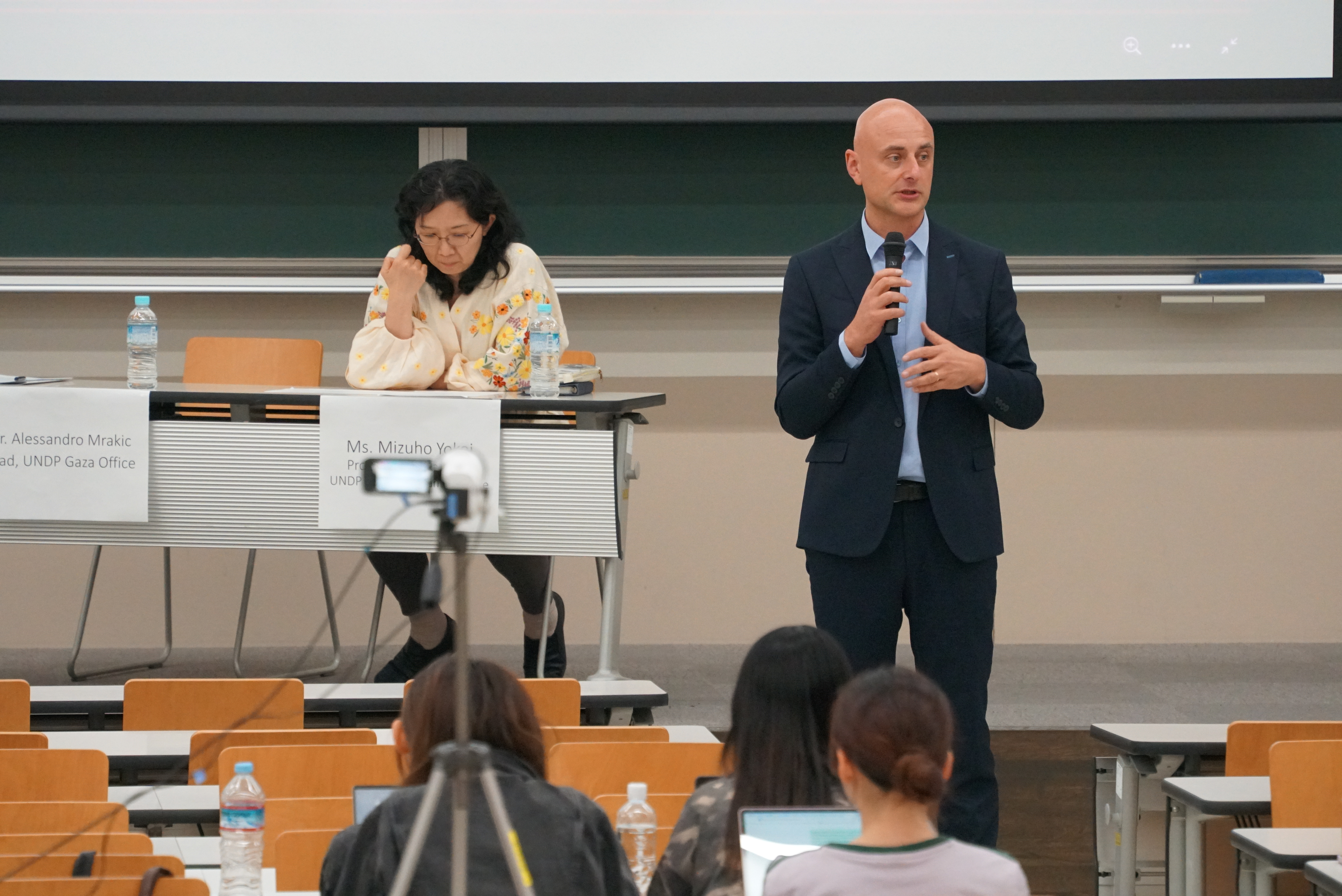
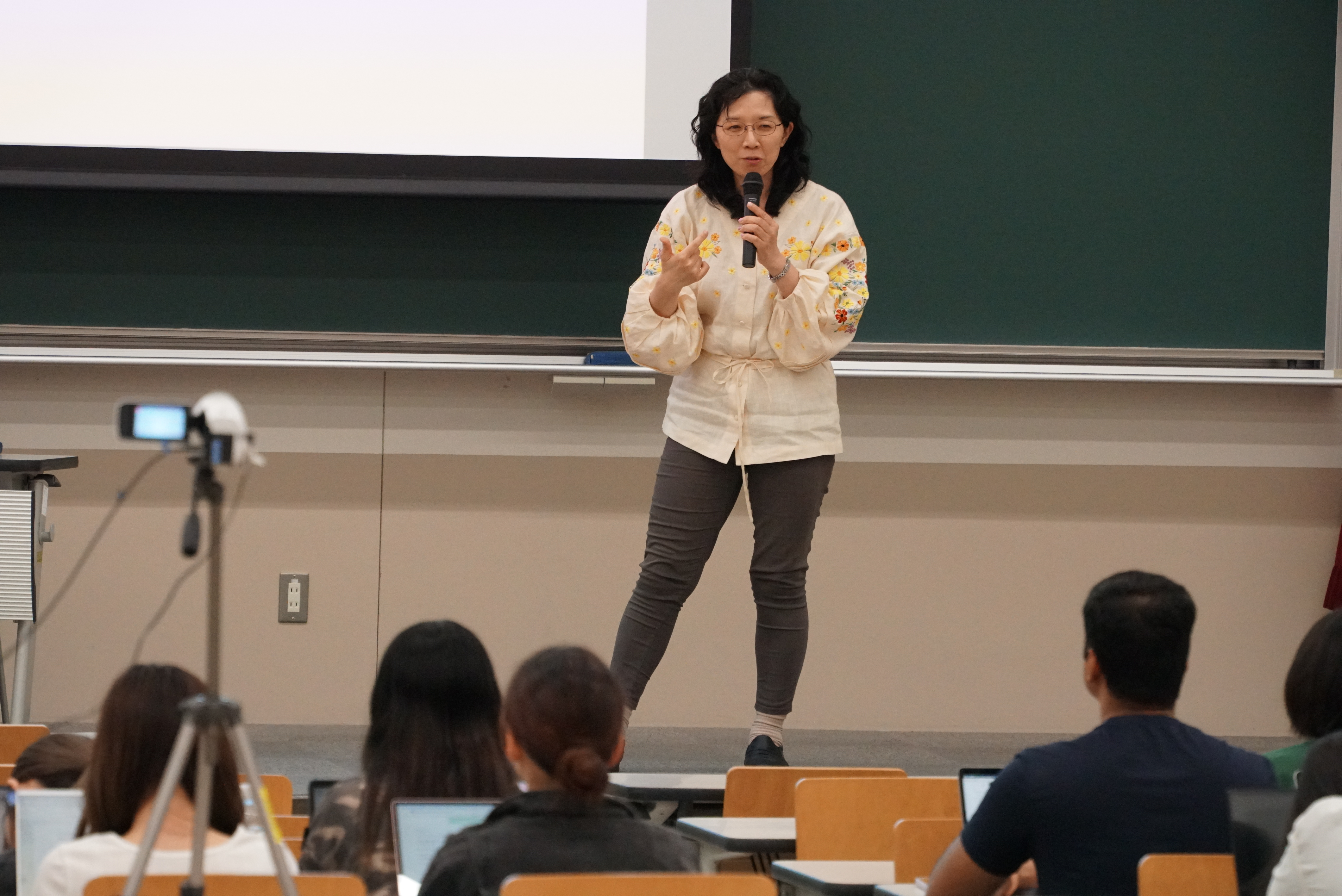
During the lively Q&A session, students raised a wide range of questions, prompting discussions on coordination among UN agencies in crisis settings, the impact of emerging technologies such as artificial intelligence and drones on conflict and recovery, future prospects for Gaza and Ukraine, and the challenges of ensuring fair and equitable resource allocation. The speakers highlighted that delivering assistance equitably under conditions of limited resources is both a significant challenge and a core responsibility. They stressed that sustainable recovery requires an integrated approach that connects humanitarian action with long-term development and peacebuilding efforts.
Following the seminar, participants shared highly positive feedback. One student commented, “It was an invaluable opportunity to hear directly from practitioners working on the ground. The experience gave me a much deeper understanding of the realities of international development and crisis response.” Another noted, “I was deeply impressed by UNDP’s commitment not only to addressing immediate needs but also to tackling the structural causes of vulnerability and conflict.”
The seminar provided a meaningful learning opportunity for students and faculty alike, deepening their understanding of contemporary global crises and the role of international organizations in supporting recovery, development, and peace. It also highlighted the importance of integrated approaches to crisis response in an increasingly complex and interconnected world.